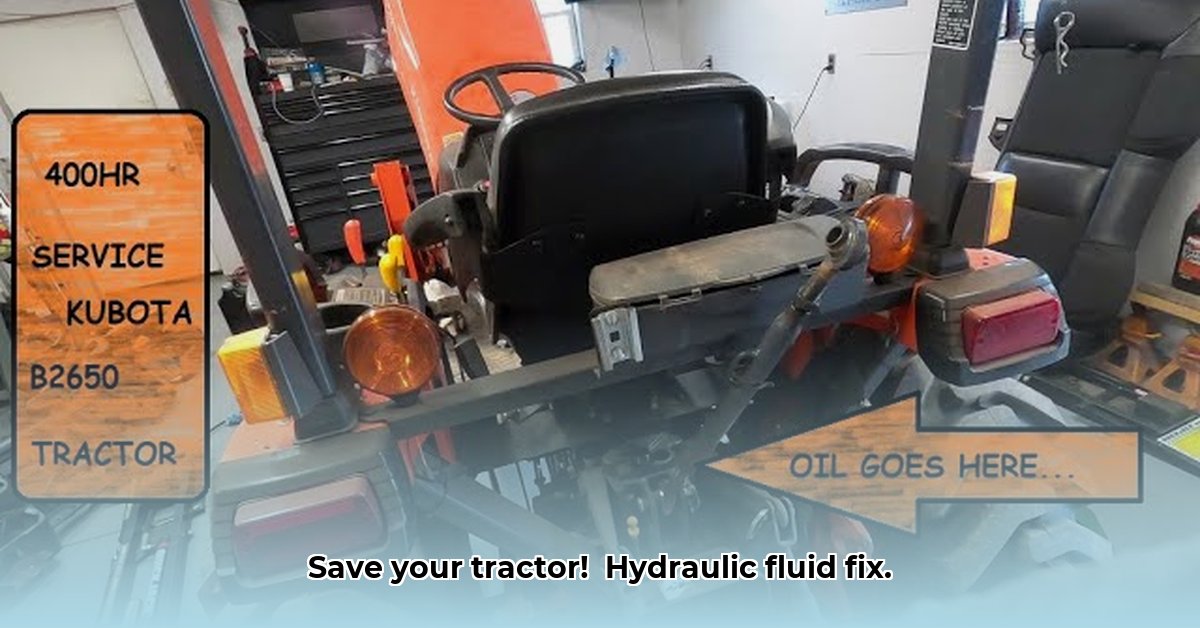
Keeping your tractor's hydraulic system healthy is crucial for its performance and longevity. This guide provides clear, step-by-step instructions on how to safely add hydraulic fluid to your tractor, regardless of whether it's a Mahindra, John Deere, or another brand. We'll also cover troubleshooting common problems and essential preventative maintenance. For more information on hydraulic oil, check out this helpful resource.
Understanding Your Tractor's Hydraulic System
Before you begin, remember that a tractor's hydraulic system is complex. Incorrect fluid levels or the use of the wrong type of fluid can lead to serious damage and expensive repairs. Always consult your owner's manual for specific information regarding your tractor model. This manual will pinpoint the exact location of the hydraulic fluid reservoir and specify the recommended hydraulic fluid type.
Identifying the Correct Hydraulic Fluid
Using the correct hydraulic fluid is paramount. Your tractor's owner's manual will specify the exact type of Universal Tractor Hydraulic Fluid (UTHF) required. Using the wrong fluid can severely damage your hydraulic system, leading to costly repairs. Different manufacturers, such as Mahindra and John Deere, may have different specifications, so checking your manual is non-negotiable. Don't compromise on this—it's a critical step in preserving your tractor's hydraulic system.
Checking Your Hydraulic Fluid Level
Before adding any fluid, you must check the current level. Most tractors have a dipstick in the hydraulic fluid reservoir (a large tank usually located near the engine). Locate the dipstick and carefully pull it out, wiping it clean with a lint-free cloth. The dipstick will have minimum and maximum markings. If the fluid level is below the minimum mark, you’ll need to add more.
Adding Hydraulic Fluid: A Step-by-Step Guide
Adding hydraulic fluid is a straightforward process, but accuracy and safety are crucial. Follow these steps precisely:
Safety First: Park your tractor on a level surface, engage the parking brake firmly, and turn off the engine completely. Wear safety glasses to protect your eyes.
Locate the Reservoir and Filler Cap: Consult your owner's manual to locate the hydraulic fluid reservoir and its filler cap. The reservoir is typically a large tank.
Clean the Area: Use a clean, lint-free cloth to wipe down the filler cap and the surrounding area to prevent contaminants from entering the reservoir.
Add Fluid Slowly: Use a clean funnel to add the correct type of hydraulic fluid specified in your owner’s manual. Pour slowly to avoid spills and overfilling. Regularly check the dipstick to monitor the level.
Double-Check the Level: Once you've added fluid, recheck the dipstick to ensure the fluid level is within the recommended range (between the minimum and maximum markings).
Secure the Filler Cap: Tightly replace the filler cap to prevent contamination and leaks.
Troubleshooting Common Problems
Even with careful attention, problems can arise. Here are some common issues and how to address them:
Leaks: A persistent leak requires immediate attention. Small leaks may be repairable, while larger leaks often necessitate professional help. Ignoring leaks can cause significant damage to your hydraulic system.
Overfilling: Overfilling can cause foaming, reducing the efficiency of the hydraulic system. Always adhere strictly to the markings on the dipstick.
Preventative Maintenance: The Key to a Long-Lasting Hydraulic System
Regular maintenance is crucial for preventing major problems. Here's what you should do:
Regular Fluid Level Checks: Check your hydraulic fluid level before each use and at least monthly. Low fluid levels can lead to reduced performance and potential damage.
Scheduled Fluid Changes: Follow the fluid change schedule recommended in your owner's manual. This removes contaminants and extends the lifespan of your hydraulic system.
Addressing Leaks Promptly: Small leaks, if ignored, can quickly become major problems and lead to expensive repairs.
By following these steps and paying close attention to your owner's manual, you can ensure your tractor's hydraulic system performs optimally for years to come. Remember, proactive maintenance is far less costly than emergency repairs.